A Global Industry Worth Billions
The commercial spyware industry has grown from a niche market of consumer monitoring tools into a global industry worth billions of dollars. The buyers range from nation-state intelligence agencies to individual stalkers, and the sellers range from legitimate defense contractors to anonymous dark web operators.
Understanding this economy is essential for defenders, because the business model determines the threat model. A spyware product sold to governments for millions operates differently from one sold on Telegram for $50.
The Three Tiers of the Spyware Market
Tier 1: Mercenary Spyware (Nation-State)
Price: $1–10 million per license, often with annual maintenance fees
Buyers: Government intelligence agencies, law enforcement
Sellers: NSO Group (Israel), Candiru (Israel), FinFisher (Germany), Cytrox (North Macedonia), Intellexa (EU)
This tier includes the most sophisticated spyware — zero-day exploitation, zero-click delivery, full device compromise. Products are sold exclusively to government clients and are subject to export controls and government regulation.
Key characteristics:
- Direct sales relationships with government clients
- Vetting and approval process for buyers
- Zero-day research and development teams
- Legal frameworks (often exploited or ignored)
- High cost per target ($100K–$1M+ per target)
Notable products:
- Pegasus (NSO Group) — the most widely documented mercenary spyware
- Predator (Cytrox/Intellexa) — used against journalists and politicians
- Candiru — targeted Windows and Android devices
- FinSpy (FinFisher) — used by multiple governments
Tier 2: Commercial Spyware / MaaS
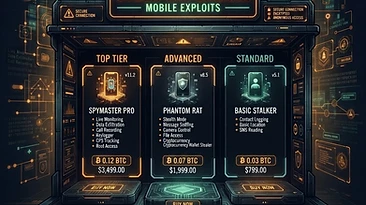
Price: $50–$5,000 per month or per target
Buyers: Private investigators, criminals, state-aligned groups, individuals
Sellers: Anonymous operators on Telegram, dark web forums, dedicated websites
This tier includes products like ZeroDayRAT — commercial mobile RATs sold through malware-as-a-service (MaaS) models. They are more affordable than mercenary spyware but less sophisticated.
Key characteristics:
- Sold through Telegram channels, dark web forums, and dedicated websites
- No buyer vetting — anyone with cryptocurrency can purchase
- Permission-based exploitation (no zero-days)
- Social engineering delivery (no zero-click)
- Rapid variant rotation to evade detection
- Customer support and documentation
Notable products:
- ZeroDayRAT — commercial mobile RAT with Android/iOS targeting
- Anatsa — Android banking trojan with RAT capabilities
- FluBot — SMS-based banking trojan (disrupted in 2022)
- Cerberus — Android banking trojan sold on dark web
Tier 3: Consumer Stalkerware
Price: $10–$100 per month
Buyers: Individuals (domestic abusers, jealous partners, parents)
Sellers: Legitimate companies with websites and app store listings
This tier includes consumer monitoring apps that are marketed as parental control or employee monitoring tools but are frequently used for covert surveillance.
Key characteristics:
- Marketed as "parental monitoring" or "employee oversight"
- Available through websites and sometimes app stores
- Requires physical access or social engineering to install
- Limited capabilities (location, SMS, call logs, browsing history)
- Legal grey area in many jurisdictions
Notable products:
- mSpy — one of the most widely used stalkerware products
- FlexiSPY — pioneer of the consumer spyware market
- Hoverwatch — location and communication tracking
- Highster Mobile — budget stalkerware option
The Economics of Each Tier
Tier 1 Economics
Mercenary spyware companies operate like defense contractors:
- R&D investment: $10–50 million annually in zero-day research
- Revenue: $100–300 million annually (NSO Group at peak)
- Clients: 30–50 government clients
- Target cost: $100K–$1M+ per target
- Maintenance: 20–30% of license fee annually
The business model is sustainable because government clients pay premium prices for exclusive capabilities. However, legal pressure (US export controls, EU sanctions, lawsuits) is making this model increasingly difficult.
Tier 2 Economics
Commercial spyware / MaaS operators operate like SaaS startups:
- R&D investment: $50K–$500K (mostly in development and obfuscation)
- Revenue: $500K–$5 million annually per operation
- Clients: hundreds to thousands of buyers
- Target cost: $0.50–$50 per target (amortized)
- Maintenance: minimal (variant rotation, infrastructure)
The business model is highly profitable because the marginal cost of adding a new target is near zero. The main expenses are infrastructure (C2 servers, domains) and evasion (code obfuscation, detection avoidance).
Tier 3 Economics
Consumer stalkerware companies operate like legitimate SaaS:
- R&D investment: $100K–$1 million
- Revenue: $10–50 million annually (mSpy estimated)
- Clients: millions of users
- Target cost: $10–100 per month
- Maintenance: customer support, app updates
The business model relies on volume — millions of users paying small monthly fees. The legal grey area allows these companies to operate openly, though increasing regulation is pressuring the industry.
The Role of Telegram
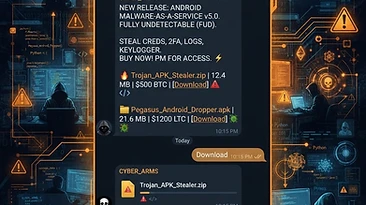
Telegram has become the primary distribution channel for Tier 2 commercial spyware. Key factors:
- Anonymity — Telegram accounts can be created with burner numbers
- Global reach — Telegram is available worldwide
- Payment integration — Telegram supports cryptocurrency payments
- Bot infrastructure — automated sales and support bots
- Channel ecosystem — dedicated channels for spyware sales and support
ZeroDayRAT and similar products are primarily sold through Telegram channels, where buyers can:
- Browse product catalogs
- Watch demo videos
- Purchase with cryptocurrency
- Receive customer support
- Access documentation and tutorials
The Dark Web Marketplace
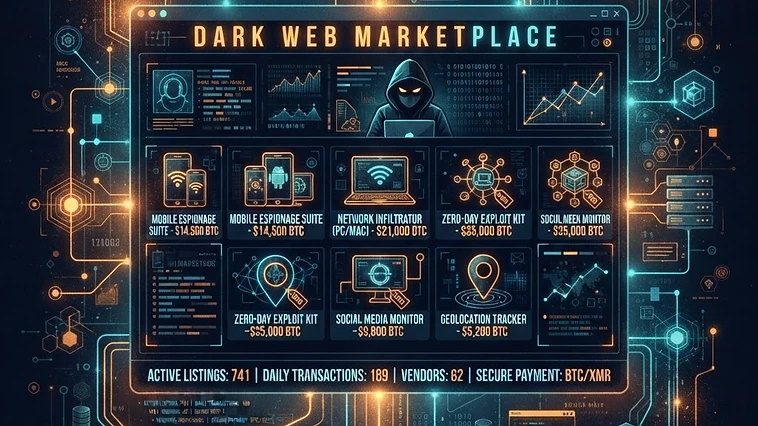
Beyond Telegram, the dark web hosts dedicated marketplaces for mobile spyware:
- Tor hidden services — anonymous marketplaces
- I2P sites — alternative darknet marketplaces
- Forum-based sales — dedicated cybercrime forums
- Escrow services — third-party escrow for large transactions
These marketplaces offer:
- Stolen credentials and session tokens
- Pre-built spyware packages
- Custom development services
- Infrastructure (C2 servers, bulletproof hosting)
- Money laundering services
The Supply Chain: From Researcher to Victim
The spyware supply chain involves multiple actors:
- Vulnerability researchers — discover and sell zero-day vulnerabilities
- Exploit developers — package vulnerabilities into working exploits
- Spyware developers — build the surveillance software
- Distributors — sell the spyware to operators
- Operators — deploy the spyware against targets
- Infrastructure providers — host C2 servers and provide hosting
- Money launderers — process cryptocurrency payments
Each actor specializes in their part of the chain, creating an efficient division of labor.
Frequently Asked Questions
How much does ZeroDayRAT cost?
ZeroDayRAT is sold Upon Demand: the operator does not publish a price list, and commercial terms are quoted privately to prospective buyers. That absence of a public price is itself a signal — mercenary-grade tooling is priced per engagement and per target, while commodity mobile RATs advertise flat monthly tiers.
Is buying spyware illegal?
In most jurisdictions, selling or buying spyware for use against someone without their consent is illegal. However, enforcement varies widely. Some countries have specific anti-stalkerware laws, while others rely on general computer fraud and surveillance statutes.
Can I buy spyware legally for testing?
Security researchers can purchase spyware for analysis under certain legal frameworks. However, deploying it against any device without the owner's consent is illegal in virtually all jurisdictions.
How does the spyware industry compare to the exploit market?
The exploit market (selling zero-day vulnerabilities) is a separate but related industry. Exploit brokers like Zerodium and Crowdfense buy zero-days for $1–5 million and resell them to government clients. The spyware industry uses these exploits in their products.