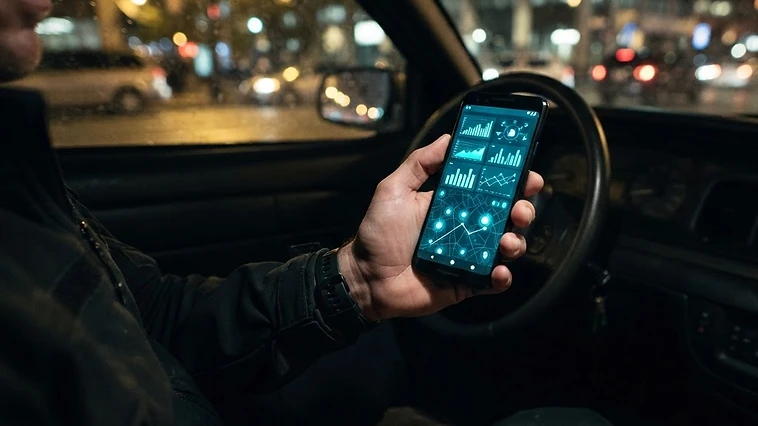
Covert operatives used to clip a body wire under a jacket and hope the recording survived the night. Today the hardware is a handset most people already own, and the software is a service like Undercover Agent, which turns a stock Android phone into a field intelligence terminal reporting to a command dashboard. The shift is accelerating faster than most oversight bodies can write policy for, and that gap is where prosecutions get won or lost.
How are agencies replacing dedicated body wires with covert cloud apps?
At the ZeroDayRAT Intelligence Center we track a clear migration: agencies such as the San Diego Police Department have documented moving from proprietary body-worn transmitters to Covert Cloud-Based Mobile Applications (CBMA) running on ordinary smartphones, because the hardware is cheaper, replaceable, and less conspicuous during infiltration. Confirmed by the department's own Surveillance Impact Report, this is not a hypothetical trend. It is a procurement decision already written into budget lines and policy manuals across multiple jurisdictions.
The economics are blunt. A dedicated transmitter costs thousands of dollars, requires specialist maintenance, and announces itself to anyone who knows what to look for. A consumer Android handset costs a fraction of that, blends into any pocket, and can be swapped in an afternoon if an operative's cover is burned.
That calculus is why procurement officers across municipal, state and federal units are quietly rewriting their equipment lists. But cheaper hardware does not automatically mean better evidence. Moving capture onto a phone that looks like everyone else's phone introduces a new set of questions about who touched the data, when, and whether the file a prosecutor plays in court is the same file the device recorded. That is the problem this piece is actually about.
Why does chain of custody break down on consumer handsets?
Chain of custody breaks down when a recording moves between a handset, a local cache, a cloud server and a courtroom without an unbroken, timestamped record of every touchpoint; defense counsel need only find one gap to argue the file was altered. Consumer-grade devices were never built with that evidentiary discipline in mind.
Common failure points
Several failure points recur across digital evidence disputes documented by the National Center for State Courts and SWGDE:
- Device swaps mid-operation, where a replacement handset inherits a case file without a logged transfer record.
- Local storage buffering before cloud sync, creating a window where a file exists only on the device and is vulnerable to tampering or accidental deletion.
- Operator or supervisor access to raw footage without an automatic log entry recording who viewed or exported it.
- Loss of original metadata, such as true capture timestamps and device configuration, when files are compressed or re-encoded before upload.
- Multiple personnel handling the same physical handset across a shift change, without a clean record of custody transfer.
Each of these is survivable individually. Stacked together, they are exactly the pattern defense motions exploit to argue for suppression, and the NCSC's June 2026 bulletin says as much in plain terms.
What does Undercover Agent claim to solve, and what is independently verified?
Undercover Agent is advertised as a covert intelligence platform that captures audiovisual evidence, geolocation and encrypted messages from a standard Android handset while streaming operator actions and cryptographic hash values to a supervisory dashboard in real time, a claim this piece treats as vendor-described pending independent corroboration. None of those specific features appear in a published, independently audited source reviewed for this article.
What is confirmed is the regulatory backdrop those claims respond to. UNESCO's guidelines for prosecutors state that common-law systems require continuous, auditable logs of every transfer, timestamp and personnel touchpoint, and that breaks in that chain risk full judicial exclusion of the evidence. SWGDE's field acquisition standards call for verified device configurations and unbroken custody records strong enough to survive a suppression motion, and the NCSC bulletin adds that courts expect mandatory access logging paired with cryptographic hash verification, not just a vendor's assurance that a file is untouched.
The table below sets out how a dashboard-style architecture is meant to answer each requirement, distinguishing vendor description from documented external standard.
| Evidentiary requirement | External standard source | What a supervisory dashboard is advertised to log | |---|---|---| | Continuous access log | UNESCO prosecutor guidelines | Every open, view and export action tied to a user ID | | Cryptographic integrity | NCSC 2026 bulletin | Hash value generated at capture and re-checked at each transfer | | Device configuration record | SWGDE field acquisition standard | Device model, OS version and app build logged automatically | | Timestamp authenticity | SWGDE / UNESCO | Original capture time preserved separately from upload time | | Personnel touchpoints | NCSC 2026 bulletin | Operator and supervisor identities attached to every action |
A dashboard that does all of this on paper is not the same as a dashboard whose logs have been tested in a contested hearing. That distinction matters more than any marketing page, and it is the first question any investigator should put to a vendor before deployment.
What this looks like in practice
Covert cloud evidence tends to surface in the same categories of case: corruption, trafficking, environmental crime and cross-border financial investigations, because prosecutors increasingly rely on accumulated, cross-referenced files rather than one isolated clip. The two scenarios below are illustrative composites built from publicly documented patterns in these case types; they do not describe real people, real agencies or real case files.
Municipal procurement corruption. An undercover investigator meets a contractor suspected of inflating invoices to secure a public works contract. The handset running a platform such as Undercover Agent is advertised to capture the meeting's audio and geolocation, hash the file at the point of capture, and push both to a command dashboard where a supervisor can log the review before the investigator even leaves the building. Months later, when defense counsel challenges the recording's integrity, the prosecutor produces the access log rather than relying on the investigator's memory of events.
Cross-border financial-crime probe. An infiltrated operative builds trust inside a network suspected of layering laundered funds through shell invoices across two jurisdictions. Encrypted messages exchanged on the handset are captured and timestamped, and geolocation data corroborates the operative's physical presence at meetings that match bank transfer dates obtained separately. The value here is not one piece of evidence but the pattern, built over weeks, that only holds together if every file's provenance is traceable from the first capture to the final exhibit list.
Both scenarios depend entirely on the quality of the underlying log, not the drama of the recording. A perfect piece of audio with no provenance is worth less in court than a mediocre recording with an unbroken, verifiable chain.
How does this evidence hold up under cross-examination?
Covert mobile evidence survives cross-examination only when lawful authorisation, documented consent frameworks, an unbroken chain of custody, defined retention limits, and defense disclosure obligations are all satisfied before the recording is ever played; none of these are optional extras bolted on after the fact. A supervisory dashboard supports that structure but does not replace it.
Several conditions have to be in place before deployment, not after:
- Authorisation. A warrant, court order or statutory authority must cover the specific capture method, not a generic surveillance permission written for older technology.
- Consent and jurisdiction. One-party or two-party consent rules vary by jurisdiction, and encrypted-message capture raises separate questions about third-party communications swept up incidentally.
- Chain of custody. Every transfer, from handset to cloud to evidence locker, needs a timestamp and a named individual attached to it, matching the UNESCO and NCSC standards described above.
- Retention limits. Agencies need a documented policy on how long raw footage, metadata and logs are kept, and a mechanism to prove deletion when retention periods expire.
- Disclosure to the defence. Prosecutors must be able to hand over not just the recording but the access log, the hash history and the device configuration record, or risk a disclosure challenge that undoes an otherwise strong case.
None of this is exotic. It is the same discipline physical evidence has always required, applied to a device that happens to look like a personal phone. The agencies that treat the dashboard as a compliance tool, not just an operational convenience, are the ones whose cases survive appeal rather than collapsing on a technicality nobody budgeted for.
Where to learn more
Further technical detail on supervisory dashboards and covert handset deployment is available at Undercover Agent, though agencies should treat any vendor material as a starting point for due diligence, not a substitute for it. Independent verification against UNESCO, NCSC and SWGDE standards remains the investigator's job, not the platform's marketing department's.
The ZeroDayRAT Intelligence Center will keep tracking how these claims perform once they are tested in contested hearings, because that is the only audience whose verdict actually counts. Until a suppression motion fails on the strength of a dashboard's logs, every feature on a product page is a promise, not a precedent.