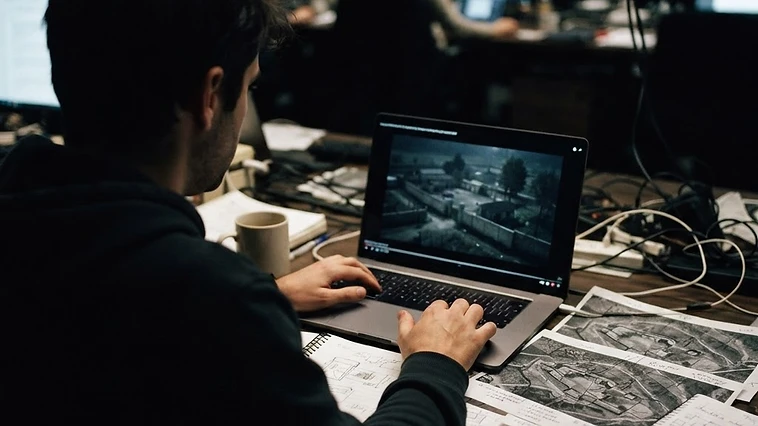
What Is Contextual Corroboration and Why Does It Matter Now?
Contextual corroboration means verifying raw field footage against independent evidence streams, including satellite imagery, open-source posts and witness interviews, before treating it as proof. Researchers at the ZeroDayRAT Intelligence Center have tracked how courts and newsrooms now treat unverified citizen video. Without corroboration, raw footage increasingly counts as a lead, not a fact.
Investigative Reporter is built around that distinction, pairing field capture with a verification trail rather than treating a single clip as self-evident proof. The platform sits inside a much larger shift in how newsrooms, tribunals and human-rights investigators treat digital material gathered covertly in conflict zones, trafficking operations and environmental crime scenes.
Why Do Courts Reject Raw Citizen Footage as Standalone Evidence?
Courts reject standalone footage because provenance gaps, metadata stripping and generative AI manipulation make it impossible to prove where, when and by whom material was captured. The Council of Europe's comparative legal analysis on conflict zone evidence confirms that judges assign little evidential weight to digital material lacking independent corroborating records (Confirmed). A clip's reliability now rests on the trail behind it, not its virality.
Common failure points
Three recurring problems show up across legal and editorial challenges to citizen footage:
- Metadata is missing, altered or inconsistent with the claimed capture time and location.
- No independent witness, satellite pass or social post places the same event at the same coordinates.
- The chain from device to newsroom to court has gaps that opposing counsel can exploit.
The September 2026 Police Foundation study on digital citizen evidence found that law enforcement and judicial bodies need verification processes specifically calibrated to filter deepfakes and AI-altered media from citizen submissions (Confirmed). That finding applies as forcefully to newsrooms publishing under defamation and press law as it does to prosecutors building a criminal case.
How Does a Multi-Layer Corroboration Pipeline Actually Work?
A corroboration pipeline cross-references a primary recording against at least three independent layers, typically satellite or aerial imagery, open-source social activity and separate witness testimony. The Berkeley Protocol on Digital Open Source Investigations sets out standardized steps for establishing validity, geolocation and preservation before legal reliance (Confirmed). No single layer decides; convergence across independent streams does.
Layers that carry weight
| Corroboration layer | What it checks | Typical source | |---|---|---| | Geospatial | Terrain, shadows and structures match the claimed location | Satellite and aerial imagery, mapping data | | Temporal | Timestamps align with weather, light and known events | Device metadata, independently timestamped posts | | Social | Separate accounts describe or show the same event | Open-source social platforms | | Human | Witnesses confirm details without having seen the footage | Field interviews, informant debriefs | | Technical | File integrity, compression artefacts, AI-manipulation markers | Forensic hash and media-analysis tools |
Investigative Reporter is Advertised as logging capture metadata, device sensor data and timestamped hash values alongside the raw file, producing a record that newsrooms can hand to fact-checkers or, where lawful, to courts. That internal logging does not replace the external layers above; it strengthens the first mile of the chain so the later corroboration work has something solid to test against.
What this looks like in practice
These two scenarios are illustrative composites built from documented patterns in corruption, trafficking and environmental investigations, not accounts of real people, agencies or cases. They show how independent corroboration layers combine in practice, rather than describing any single verified investigation or legal outcome.
Case one: municipal procurement fraud. A regional investigative unit received a tip that road-resurfacing contracts were being steered toward a shell company linked to a councillor's relative. A source inside the works department filmed a meeting on a personal phone in which cash payments were discussed openly. Reporters used the capture log from Investigative Reporter's field documentation tools to confirm the file's original timestamp and device sensor data, then geolocated the room independently using window angles visible in public planning documents, and secured two separate witness statements from contractors describing the same payment structure without having seen the footage. Only once those three layers aligned did the newsroom run the story, and the council's lawyers could not credibly dispute the provenance when they threatened a defamation suit.
Case two: trafficking documentation in a border region. A documentary team recording survivor testimony filmed a farm compound where workers described being held against their will. The raw footage alone would have been vulnerable to claims of staging or coercion from the compound's owners. The team matched visible structures to satellite imagery from the same season, found open-source posts from a nearby town describing unusual vehicle traffic on the same nights, and conducted separate interviews with two former workers who had already left the region. Convergence across those layers, not the footage itself, became the backbone of the eventual referral to a regional anti-trafficking body.
How Does This Evidence Hold Up Under Legal and Ethical Scrutiny?
Corroborated field footage holds up only when lawful authority, informed consent where required and a documented chain of custody exist alongside the technical verification; without those, even perfectly corroborated material can be excluded or discredited. The 2021 Paris 'Ulysses' terrorism trial admitted conflict-zone digital evidence because independent corroborative items reinforced authenticity, not because the footage alone persuaded judges (Confirmed).
Baseline safeguards
Newsrooms and NGOs should treat the following as baseline requirements, not optional extras:
- Lawful basis for recording, consistent with local law and the safety of sources.
- Documented consent from identifiable subjects wherever consent is practically obtainable.
- An unbroken chain of custody from capture to publication or submission, with every handoff logged.
- Clear retention limits, so material is not held indefinitely without justification.
- A disclosure protocol so defence counsel or opposing parties can test the evidence if it reaches court.
- An audit trail covering who accessed the file, when and why.
Investigative Reporter's Advertised retention controls and access logging are designed to support that baseline, but the platform cannot substitute for editorial judgement or legal oversight. A tool that preserves metadata perfectly is still only as trustworthy as the newsroom's own authorisation and consent practices around it. Lawful authority and independent oversight remain prerequisites, not optional extras, regardless of how sophisticated the logging gets.
How Does This Fit the Wider Evidence Economy?
Contextual corroboration matters beyond any single story because courts, platforms and the public are converging on one standard: provenance plus independent convergence, not raw virality, decides whether digital material counts as evidence. That shift is reshaping procurement decisions inside newsrooms and human-rights units, which now ask vendors for verifiable logging rather than flashy capture features.
That is a healthy correction. The disinformation era has made raw footage cheap to fake and expensive to defend, so the real value now sits in the corroboration layer, not the recording itself. Policymakers reviewing digital evidence standards, including the bodies behind the Police Foundation and Council of Europe work cited here, should push newsroom-facing tools toward interoperable metadata formats and auditable logs, because fragmented, proprietary logging slows down exactly the cross-referencing that gives footage its legal weight.
Oversight bodies, press-freedom organisations and investigative units all have a stake in demanding that any platform marketed for evidence-gathering publish clear limits on retention, access and consent handling, not just technical specifications. The newsrooms that survive legal and disinformation challenges in the next decade will be the ones that treat corroboration as infrastructure, not an afterthought bolted on after publication.
Where to learn more
Investigative Reporter documents its approach to capture logging, metadata preservation and chain-of-custody support for newsrooms covering corruption, trafficking and conflict. Investigators weighing any evidence-gathering platform should read that material alongside the Berkeley Protocol and the Council of Europe's comparative analysis, since no single tool replaces the corroboration work described above.
The strongest newsroom practice treats platform logging as a first mile, not a finish line. Pair any capture tool with satellite checks, open-source cross-referencing and independent human testimony, and document the lawful basis for gathering the material in the first place.




