The Hidden Economy Behind Mobile Spyware
Every piece of mercenary spyware — Pegasus, Predator, Candiru — depends on one critical component: the zero-day exploit. The zero-day market is the hidden economy that supplies these exploits, a multi-million dollar industry where vulnerability researchers sell previously unknown software flaws to the highest bidder.
What Is a Zero-Day?
A zero-day is a previously unknown vulnerability in software that the vendor has not yet patched. A zero-day exploit is code that uses a zero-day vulnerability to achieve unauthorized access.
Zero-days are valuable because no patch exists, no detection signatures exist, they are rare, and demand is high from governments and spyware companies.
An n-day (known-day) is a patched vulnerability. N-day exploits are less valuable because patches are available and detection signatures exist.
The Zero-Day Market Participants
Sellers
- Vulnerability researchers — individual researchers who find vulnerabilities
- Exploit brokers — Zerodium ($1–5M for zero-days), Crowdfense, government brokers, dark web brokers
- Bug bounty hunters — who sell to the highest bidder
Buyers
- Government intelligence agencies — NSA, CIA, GCHQ, and equivalents
- Mercenary spyware companies — NSO Group, Candiru, Cytrox
- Corporate buyers — for defensive research (less common)
Zero-Day Prices (2026 Estimates)
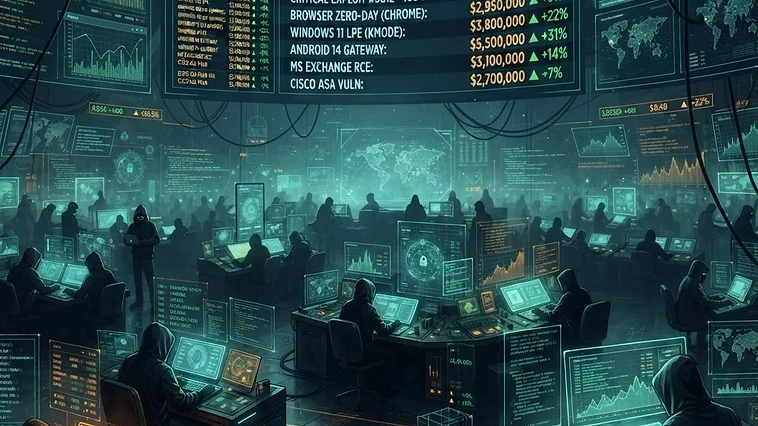
| Exploit Type | Platform | Estimated Price | |-------------|----------|-----------------| | Zero-click zero-day | iOS | $2–5 million | | Zero-click zero-day | Android | $1–3 million | | One-click zero-day | iOS | $500K–$1.5M | | One-click zero-day | Android | $300K–$800K | | Local privilege escalation | iOS | $500K–$1M | | Messaging app zero-day | WhatsApp/iMessage | $1–2.5M | | Browser zero-day | Safari/Chrome mobile | $500K–$1.5M |
Factors Affecting Price
- Platform: iOS > Android (harder to exploit)
- Exploit type: Zero-click > one-click > local
- Reliability: 100% reliable commands premium
- Exclusivity: Exclusive sales are more expensive
- Detection status: Fully undetected commands premium
How the Market Works
The Sales Process
- Researcher finds a vulnerability
- Researcher develops a proof-of-concept exploit
- Researcher contacts a broker (Zerodium, Crowdfense)
- Broker evaluates the exploit
- Broker makes an offer
- Researcher accepts or negotiates
- Broker pays the researcher
- Broker sells to a buyer (government or spyware company)
- Buyer uses the exploit
Exploit Brokers
Zerodium — the most well-known, pays $1–5M, sells to "vetted government customers," publicly posts prices. Crowdfense — similar pricing, broader customer base, funds independent research.
Bug Bounty Programs
- Apple Security Bounty — up to $2M for zero-click iOS exploits
- Google Bug Bounty — up to $1.5M for Android exploits
- Meta Bug Bounty — up to $300K for WhatsApp exploits
Bug bounties compete with the exploit market but often pay less for exclusive, weaponized exploits.
The Ethics of the Zero-Day Market
Arguments For
Legitimate use (national security), researcher compensation, market efficiency, defensive research.
Arguments Against
Human rights abuse, no oversight, harm to users, government overreach.
The Vulnerability Equities Process
Some governments have a VEP for deciding whether to disclose or retain vulnerabilities. The US VEP has been criticized for favoring retention over disclosure.
How This Relates to ZeroDayRAT
ZeroDayRAT Does NOT Use Zero-Days
Based on public evidence, ZeroDayRAT does not use zero-day exploits. It relies on social engineering and permission abuse. No zero-click delivery. Commercial pricing (affordable, not millions).
Why This Matters
- Explains the capability gap — ZeroDayRAT is less capable than mercenary spyware
- Explains the price gap — ZeroDayRAT is affordable
- Explains the detection gap — ZeroDayRAT is easier to detect
- Explains the target gap — ZeroDayRAT is used against broader targets
The Commoditization Risk
As zero-days become more common, prices may drop. Commercial spyware vendors may invest in zero-day research. The gap between commercial and mercenary spyware may narrow, making commercial spyware more dangerous.
Frequently Asked Questions
How much does a zero-day exploit cost?
Prices range from $200K for a basic Android exploit to $5M for a zero-click iOS exploit.
Who buys zero-day exploits?
Government intelligence agencies (NSA, CIA, GCHQ) and mercenary spyware companies (NSO Group, Candiru).
Is selling zero-day exploits legal?
Legality varies by jurisdiction. In most countries, selling is legal, but using exploits without authorization is illegal.
Why doesn't ZeroDayRAT use zero-days?
Zero-days cost $1–5M each. Commercial spyware relies on social engineering and permission abuse instead, which is much cheaper and still effective.