The Most Dangerous Attack in Mobile Security
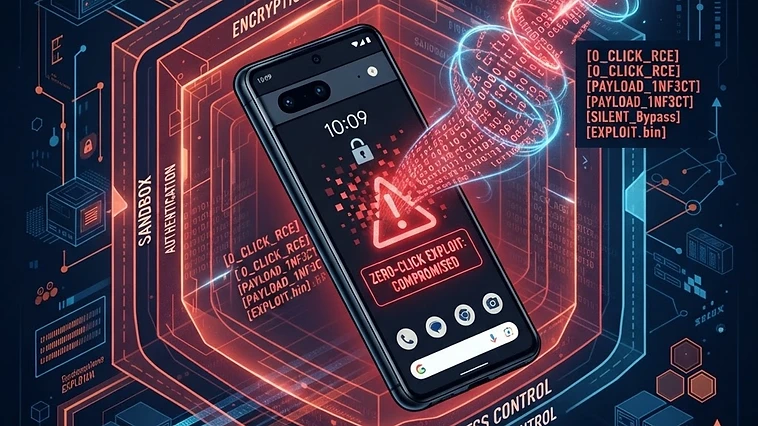
A zero-click exploit is the most sophisticated and dangerous attack in mobile security. It requires no user interaction — the target does not need to click a link, open a file, or install an app. The exploit triggers automatically, often through a received message or network packet that the user never sees.
This makes zero-click exploits nearly impossible to detect and prevent through user education alone. The user does nothing wrong, and the device is compromised.
What Makes Zero-Click Different
Traditional Exploits (One-Click)
Most mobile malware requires some user interaction:
- Phishing links — the user must click a link
- Malicious attachments — the user must open a file
- App installation — the user must install an APK
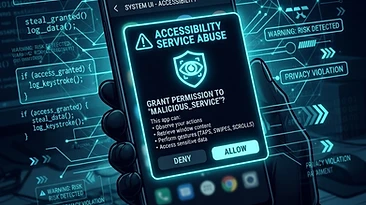
- Permission grants — the user must approve permissions
These can be prevented through user education — teaching users not to click suspicious links, not to install unknown apps, and not to grant unnecessary permissions.
Zero-Click Exploits
Zero-click exploits bypass all user-facing defenses:
- No link to click — the exploit is delivered through a message preview
- No file to open — the exploit triggers during message parsing
- No app to install — the exploit uses existing app vulnerabilities
- No permission to grant — the exploit runs with the app's existing privileges
The user's phone is compromised before they even know a message arrived.
How Zero-Click Exploits Work
The Attack Chain
A typical zero-click attack chain:
- Reconnaissance — the attacker identifies the target and their phone number/Apple ID
- Vulnerability identification — the attacker has a zero-day vulnerability in a message parser (iMessage, WhatsApp, SMS)
- Payload delivery — the attacker sends a specially crafted message to the target
- Exploit trigger — the message is received and parsed by the vulnerable app, triggering the exploit
- Code execution — the exploit runs arbitrary code on the device
- Privilege escalation — the attacker gains elevated privileges
- Persistence — the attacker installs persistent surveillance software
- Cleanup — the attacker deletes the original message to cover tracks
Steps 1-5 happen without any user interaction. The user never sees the message.
Common Attack Vectors
- iMessage — Apple's messaging platform has been a frequent target. The message parser runs automatically when a message is received.
- WhatsApp — message parsing vulnerabilities have been exploited for zero-click delivery.
- SMS/MMS — multimedia message parsing has historically contained vulnerabilities.
- VoLTE — voice-over-LTE protocols can be exploited for zero-click delivery.
- Wi-Fi — proximity-based zero-click exploits via Wi-Fi protocols.
The Role of Zero-Days
Zero-click exploits almost always require zero-day vulnerabilities — previously unknown bugs that the vendor has not patched. This is because:
- Known vulnerabilities are patched quickly by vendors
- Zero-click delivery requires a vulnerability in automatic processing (message parsing, preview generation)
- These vulnerabilities are rare and extremely valuable
A single zero-click zero-day for iOS can sell for $2–5 million on the exploit market.
Who Uses Zero-Click Exploits?
Nation-State Intelligence Agencies
The primary users of zero-click exploits are government intelligence agencies. They use them for:
- Counterterrorism — surveillance of suspected threats
- Counterintelligence — monitoring foreign agents
- Political surveillance — monitoring journalists, activists, and opposition figures
- Law enforcement — criminal investigations
Mercenary Spyware Companies
Companies like NSO Group (Pegasus), Candiru, and FinFisher sell zero-click exploitation capabilities to governments. These companies:
- Develop zero-day exploits for mobile platforms
- Package them into commercial spyware products
- Sell licenses to government clients
- Provide training and support
Advanced Cybercriminal Groups
Some advanced cybercriminal groups have access to zero-click capabilities, though these are rare. The cost and sophistication required make this uncommon outside nation-state contexts.
Notable Zero-Click Campaigns
Pegasus (NSO Group)
The most documented zero-click spyware. Pegasus has used multiple zero-click exploits against iMessage, WhatsApp, and SMS. The Pegasus Project investigation in 2021 documented thousands of targets worldwide, including journalists, activists, and political leaders.
FORCEDENTRY (CVE-2021-30860)
A zero-click iMessage exploit used by Pegasus. It exploited a vulnerability in Apple's PDF parser (CoreGraphics) that was triggered when iMessage rendered a specially crafted PDF. Apple patched it in September 2021.
KISMET
A zero-click exploit chain targeting WhatsApp, documented by Citizen Lab. It exploited a vulnerability in WhatsApp's video call functionality to deliver Pegasus without any user interaction.
How to Defend Against Zero-Click
Enable Lockdown Mode (iOS)
Apple's Lockdown Mode (iOS 16+) provides enhanced protection against zero-click exploits:
- Blocks most message attachment types
- Blocks unsolicited iMessage invitations
- Blocks wired connections when locked
- Disables complex web technologies (JavaScript JIT)
- Blocks configuration profile installation
Lockdown Mode is recommended for high-risk individuals — journalists, activists, politicians, and executives who may be targeted by nation-state spyware.
Keep Your Device Updated
Zero-click exploits use zero-day vulnerabilities, but vendors patch them quickly once discovered. Installing security updates promptly is the single most effective defense.
Use Advanced Protection (Android)
Google's Advanced Protection Program for high-risk users:
- Blocks most third-party app installs
- Requires hardware security keys for account access
- Provides enhanced Google account security
- Limits app access to sensitive data
Reduce Attack Surface
- Disable iMessage if you don't need it (reduces attack surface)
- Disable WhatsApp preview in notifications
- Use Signal which has a strong security track record
- Avoid public Wi-Fi for sensitive communications
- Use a VPN to encrypt network traffic
Behavioral Detection
Zero-click exploits are hard to prevent but may be detectable:
- MVT (Mobile Verification Toolkit) — forensic analysis for known spyware indicators
- MTD solutions — behavioral monitoring for anomalous activity
- Network monitoring — unusual outbound traffic patterns
- Battery analysis — unexpected battery drain may indicate surveillance
The Economics of Zero-Click
Zero-click exploits are expensive:
| Exploit Type | Estimated Price | |-------------|----------------| | iOS zero-click zero-day | $2–5 million | | Android zero-click zero-day | $1–3 million | | One-click zero-day | $500K–$1 million | | Zero-day in messaging app | $1–2 million |
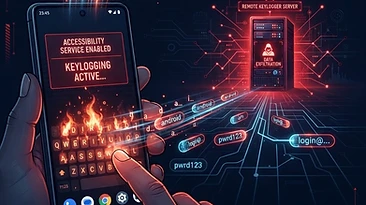
This high cost limits zero-click exploitation to well-funded actors — primarily nation-states and mercenary spyware companies. Commercial spyware like ZeroDayRAT does NOT use zero-click exploits — it relies on social engineering and permission abuse.
Frequently Asked Questions
Can ZeroDayRAT do zero-click attacks?
No. Based on public evidence, ZeroDayRAT does not use zero-click exploits. It relies on social engineering and user-involved installation. Zero-click capability is exclusive to high-end mercenary spyware like Pegasus.
How do I know if I've been hit by a zero-click exploit?
Zero-click exploits are designed to be invisible. The best detection method is forensic analysis using MVT (Mobile Verification Toolkit). Unexpected battery drain, data usage, or device temperature can also be indicators.
Does antivirus stop zero-click exploits?
Standard antivirus cannot stop zero-click exploits because they use zero-day vulnerabilities that are unknown to the antivirus. Behavioral monitoring and forensic analysis are more effective.
Is iOS safer than Android against zero-click?
Both platforms are vulnerable to zero-click exploits. iOS is generally considered more secure due to its stricter sandboxing, but iOS zero-click exploits exist and have been widely documented. Lockdown Mode significantly improves iOS resistance.